KindMind: Wearable Tech for Sensory Regulation
Adapting wrist wearables and digital interfaces to help neurodivergent users manage overstimulation and focus.
Role
Researcher
Industry
Accessibility
Duration
1 day

Problem Statement
How might we adapt wrist wearables to prevent sensory overwhelm and support focus for users with ADHD, autism, and sensory sensitivities?
Current wearables on the market are often overly complex, expensive, or visually intrusive. Standard smartwatches frequently trigger sensory fatigue through persistent, invasive notifications, while basic sensory fidgets lack smart environment detection altogether.
Stage 1: Market Analysis & User Personas
To establish our design constraints during the hackathon, we evaluated current market alternatives and synthesized insights from user interviews with neurodivergent students.
Competitive Landscape
Clinical Platforms (e.g., Feel Therapeutics): Focus heavily on clinical monitoring rather than real-time, discreet physical intervention.
Passive Wearable Fidgets (e.g., PeopleLooker, Go-Support): Offer tactile, deep-pressure regulation but lack environmental sensors or digital integrations.
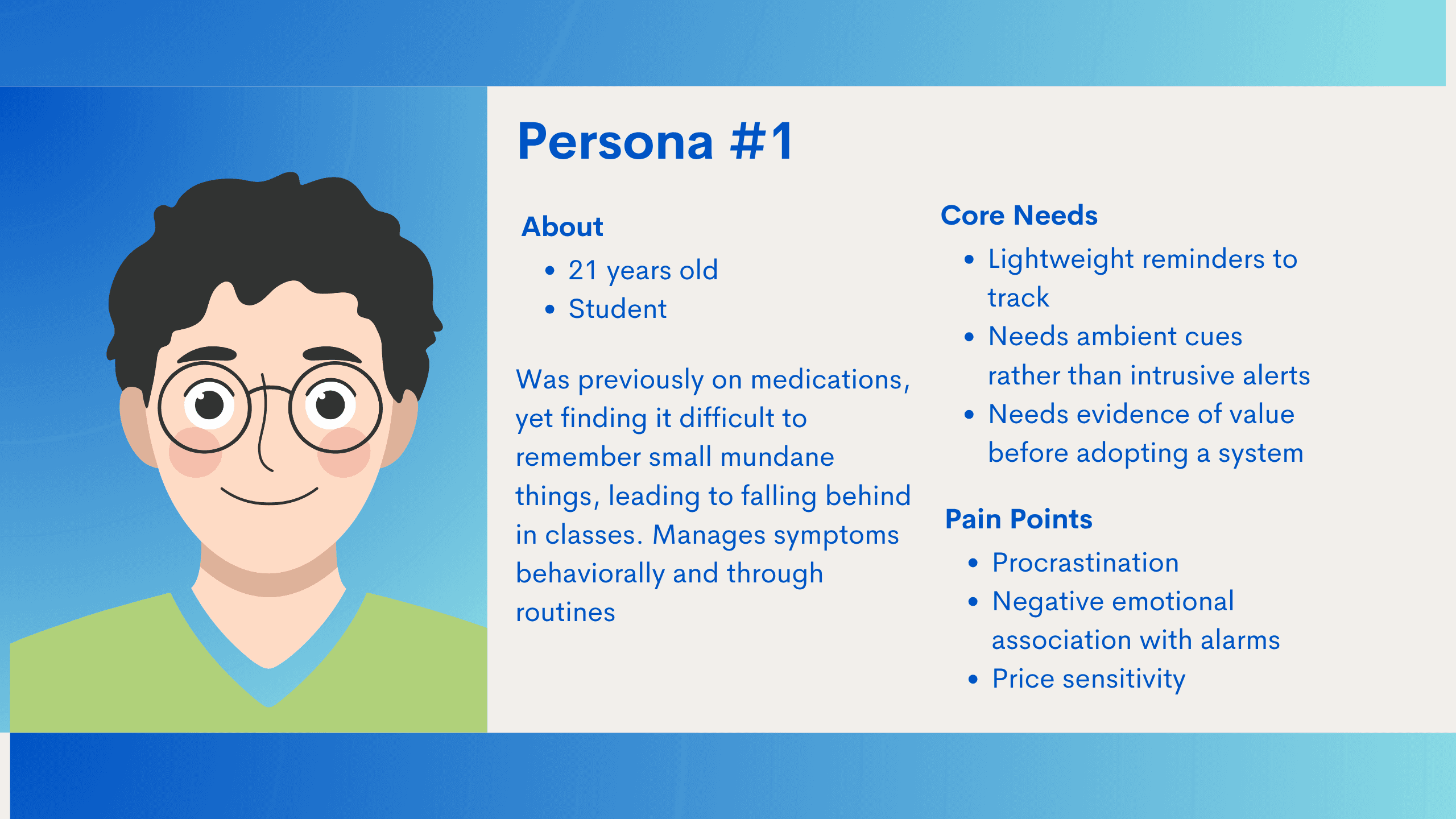
Primary User Personas
We mapped out core user profiles to align our hardware and software features with real needs:
User 1: Struggles with procrastination, needs soft ambient cues rather than intrusive audio alarms, and experiences negative emotional reactions to harsh alerts.
User 2: Highly sensitive to loud, chaotic environments; relies on noise-canceling tools and needs simple, non-distracting physical fidgets during moments of stress.
User 3: Experiences short-term attention shifts; needs tactile or haptic feedback to stay grounded without triggering skin contact sensitivities.

Stage 2: Ideation, Sketches & Final Concept
Through rapid sketching and low-fidelity whiteboard ideation, we landed on a modular concept: a "watch that watches out for you".
Hardware Features
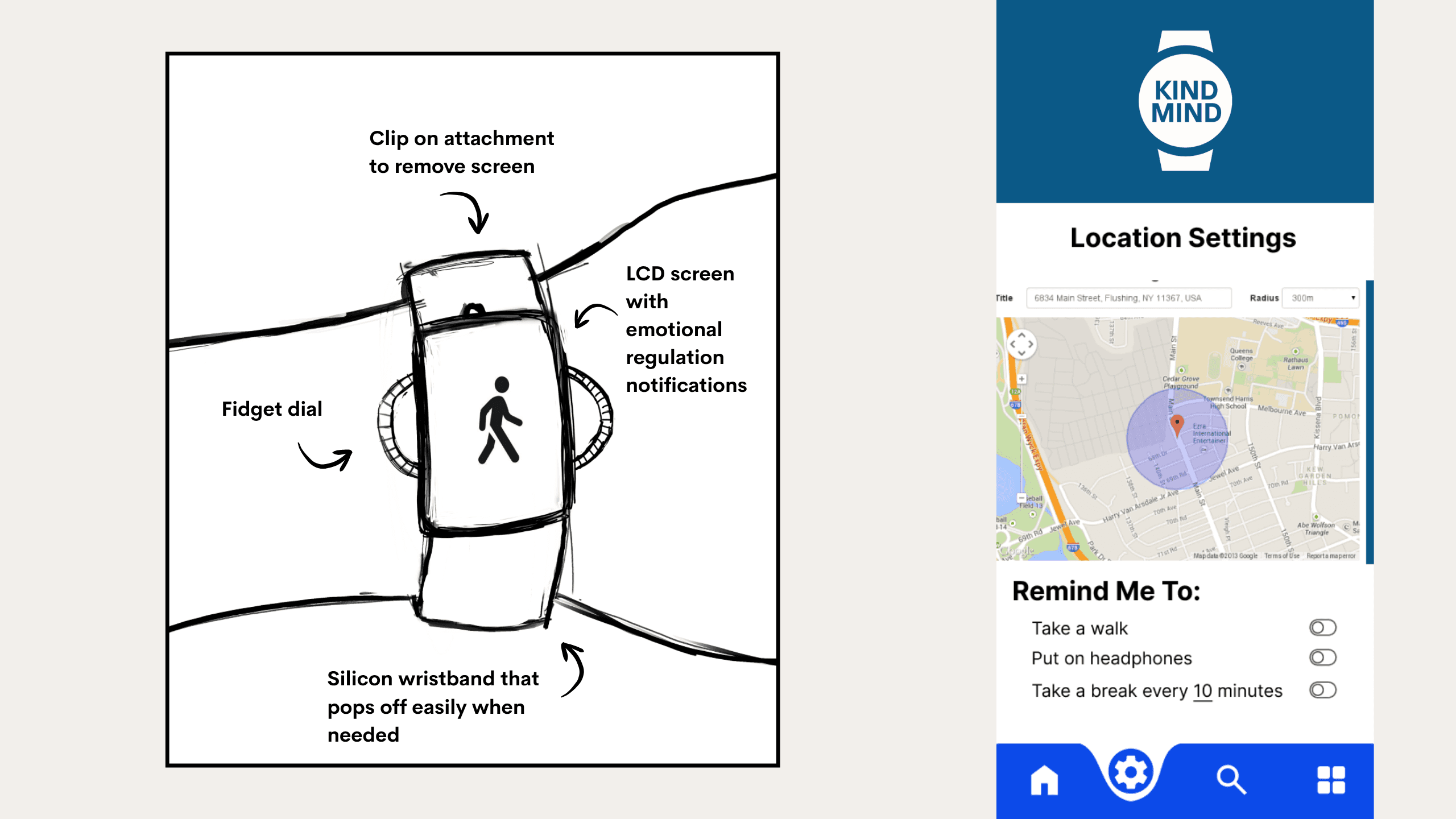
Modular Clip System: Allows the core device screen to unclip from the wristband and attach to keychains or bags, accommodating users sensitive to continuous skin contact.
Built-in Fidget Dial & Haptics: Features physical rolling dials to enable tactile self-regulation during moments of anxiety.
Environmental Sensing: Uses decibel monitoring to detect loud settings and proactively suggest sensory adjustments (like putting on headphones) before meltdowns occur.
Stage 3: Digital Interface & App Prototype
For the final pitch deliverable, we translated our concepts into wireframe sketches and a companion mobile app flow.
Modular Design Concepts: Sketched a compact screen module with side volume controls and quick-release attachment clips for keychains or straps.
Companion App Flow: Built location-based preference settings where users can customize ambient reminders (e.g., "take a walk" or "put on headphones") based on their immediate environment.


Conclusion & Future Direction
Developed over a fast-paced design jam, KindMind highlights how hardware and software can work together for neuroinclusive design. Next steps involve physical rapid prototyping, longitudinal user testing on sensor sensitivity, and refining environmental triggers to support day-to-day focus.