The Switch Kit: A DIY Solution for Accessible Play and Mobility
Creating an affordable, customizable switch kit to enable inclusive play for children with disabilities.
Role
Researcher
Industry
Accessibility
Duration
16 months - Present

Goal
Our goal was to facilitate accessible play for children with disabilities through the development of a specialized switch kit. This project aimed to create a more affordable and versatile input device that can cater to a diverse range of mobility skills, addressing the limitations and high costs of existing switches.
Stage 1: Design
Input Device Design: We began by gaining an understanding of the fundamental principles behind input device design. This involved researching existing technology and consulting with experts in assistive technology. We then designed and built a custom input device that the switches could plug into, using a MakeyMakey circuit board that functions like a keyboard. This input device was developed to be flexible enough to accommodate various switch types and easy for users to connect and use.
Switch Ideation and Creation: Through a series of brainstorming sessions with families and clinicians, we generated ideas for different types of switches. This collaborative approach ensured that the switches would meet the specific needs of children with a range of mobility challenges. We then prototyped these switches using materials that were both durable and safe for children.


Stage 2. User Testing
At-Home and Clinic Visits: We conducted user testing in both home and clinical environments to see how the switch kit performed in different settings. During these visits, we provided families and early intervention providers with the switch kits to use over a period of time.
Session Observations: Each child had a one-hour play session with the kit while we observed their interaction with the switches and the input device. We noted ease of use, the child's engagement level, and any difficulties encountered.
Feedback Collection: Families were asked to fill out the Quebec User Evaluation of Satisfaction with Assistive Technology (QUEST) to provide detailed feedback on their satisfaction with the switch kit. Additionally, we conducted surveys to gather specific information about the performance of individual switches. This feedback was critical in identifying areas for improvement and ensuring the kit met the needs of its users.
Stage 3. Content Analysis & Quantitative Analysis
To understand how clinicians perceived and experienced the switch kit, we conducted a thematic analysis of the feedback data collected. The process included:
Cleaning Data: Using Otter.AI to transcribe audio feedback from sessions, ensuring accuracy and clarity in the data.
Content Analysis: Blindly coding two initial interviews to generate an unbiased list of codes, which were then used to analyze the rest of the data.
Affinity Mapping: Merging similar codes and creating broader coding groups through an affinity mapping process. This helped in identifying common themes and patterns in user feedback, providing insights into the overall user experience and areas needing improvement.
Quantitative Analysis: Using Scratch metrics logged during the clinician deployment, we developed a custom Python script to understand how clinical presentation affected gameplay. These findings were submitted to the Northwest Biomechanics Symposium conference for Spring 2025.
Find my presentation for the Undergraduate Research Symposium here
My poster for the Northwest Biomechanics Symposium is here
Quantitative Analysis Findings:
Children with ASD showed lower engagement with the Switch Kit
Game type and feedback style impacted interaction time
The Switch Kit showcases the potential of customizable, accessible tools to support children with motor challenges.
Key Insights
Varied Engagement Patterns: Personalized, adaptive game design is crucial for meeting individual needs of children with disabilities
Takeaway: Personalized, adaptive game design is crucial for meeting individual needs of children with disabilities
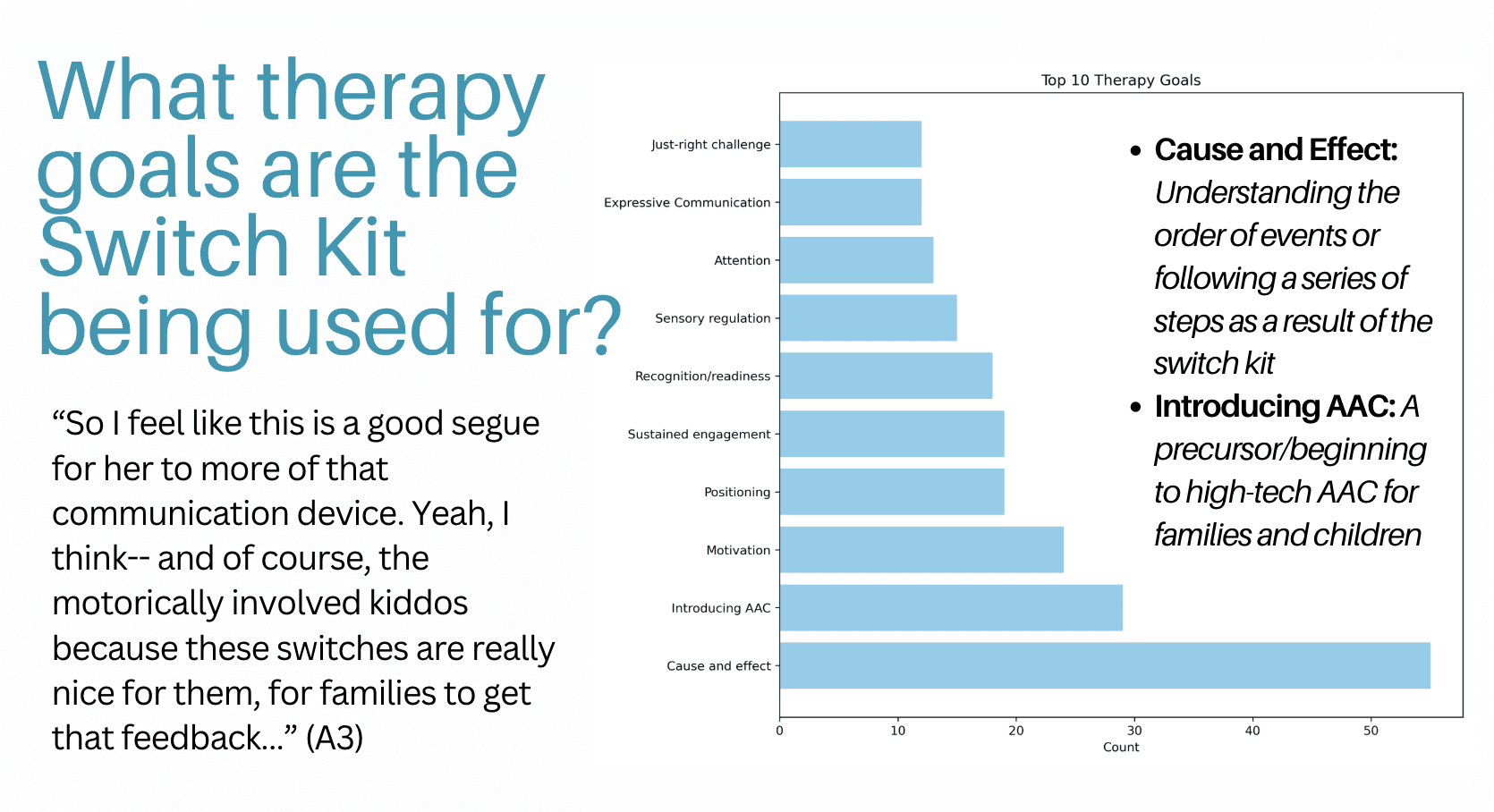
Content Analysis Findings:
We are in the process of looking into the findings from our content analysis.


Impact
The switch kit project has the potential to significantly enhance the accessibility and enjoyment of play for children with disabilities. By providing a more affordable and adaptable solution, we aim to reduce the barriers these children face in accessing technology that supports their development and creativity. Our research highlights the importance of user-centered design and the need for ongoing collaboration with families and clinicians to create effective assistive technologies. This project underscores the importance of inclusivity in technology design and the benefits of making play accessible to all children.
This work has been presented at the American Physical Therapy Association Combined Sections Meeting, Undergraduate Research Symposium, and the Northwest Biomechanics Symposium.