Branding & Competitive Analysis Deep Dive
The project involved conducting a competitive analysis for Diaper Stork, a Seattle-based company specializing in sustainable cloth diaper services and secondhand baby products.
Role
Researcher
Industry
Sustainability
Duration
3 months

Goal
The project involved conducting a competitive analysis for Diaper Stork, a Seattle-based company specializing in sustainable cloth diaper services and secondhand baby products. The goal was to evaluate the market landscape, identify growth opportunities, and develop strategies to enhance Diaper Stork's competitive positioning. By analyzing consumer preferences, competitor strategies, and emerging market trends, the project provided actionable insights to help Diaper Stork expand its offerings, improve customer engagement, and strengthen its commitment to sustainability.
Stage 1. Competitor Research Insights
Target Users: Most companies focus on millennial eco-conscious parents of children ranging from babies, toddlers, kids and teens. But are exploring ways to reach out to Gen Z parents.
Product Types: The current market primarily focuses on clothing and accessories, with some companies offering home goods, toys, and baby products. The market for the latter is comparatively newer and thus offers a growth opportunity for DiaperStork.
Territory: We focused on companies based out of North America but also looked into companies in other countries like Australia, India, UK among others .
Stage 2. Consumer Survey Insights
Used Product Purchases and Cost Efficiency: Parents often shift to buying used items after their child is born due to the realization that they don’t need higher-quality goods. This approach helps them cut costs and be more environmentally friendly, given that babies quickly outgrow items, some of which are barely used.
Factors Influencing Used Product Purchases: Hygiene and safety are critical factors for parents when deciding to buy secondhand products. They need assurance of these aspects to feel comfortable with their purchase.
Trust and Accountability: Parents require a certain level of trust in secondhand sellers. This trust can be built through mom-to-mom interactions in Facebook groups or by having a reliable system of accountability for sellers.
Research and Recommendations: Parents prefer to research products through non-biased sources such as Reddit or seek recommendations from friends, emphasizing the importance of transparent and authentic information.
Marketing Strategies: Highlighting the longevity, durability, and eco-friendly attributes of products can effectively resonate with parents, especially when presented through aesthetically pleasing, nature-themed marketing.

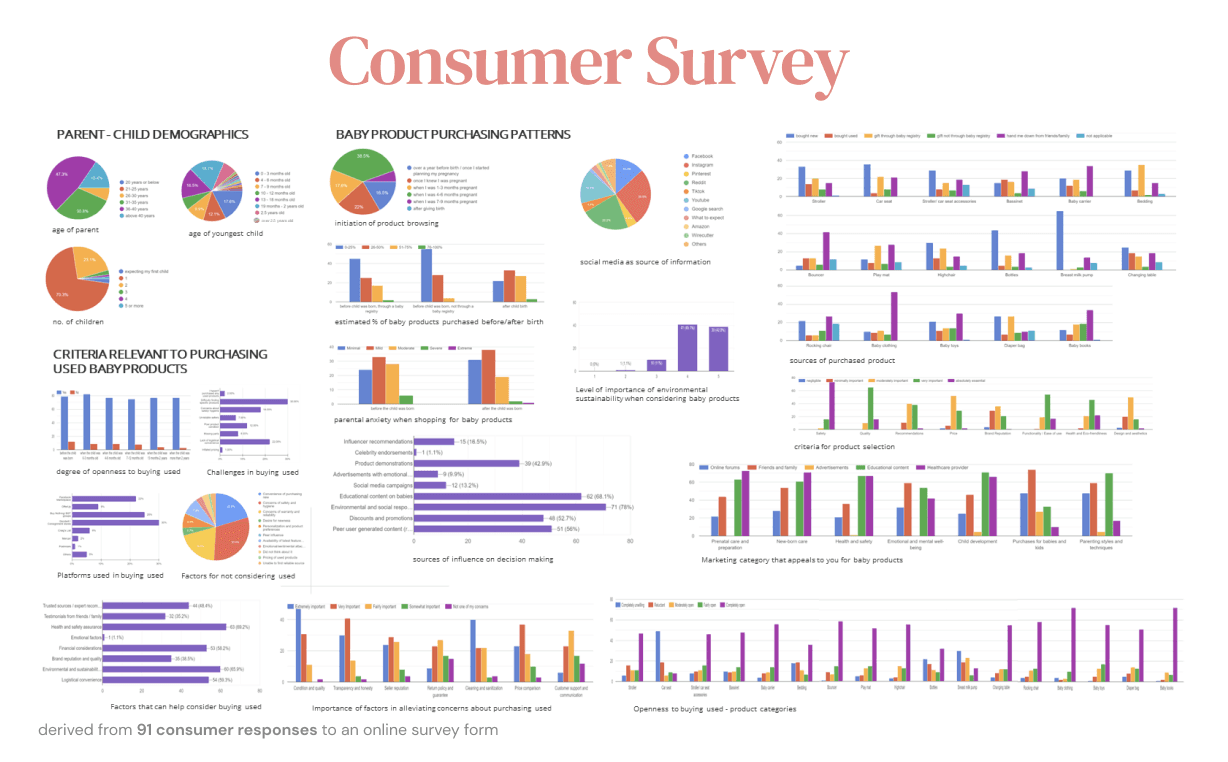
Summary of Key Findings
Consumer Insights: The analysis was based on interviews and surveys with current and potential customers, revealing their needs, preferences, and concerns about used baby products.
Competitor Analysis: Evaluation of approximately 10 competitors highlighted key trends, market strategies, and opportunities for Diaper Stork.
Market Trends: Insights into sustainability, circular economy, and the importance of hygiene, affordability, and convenience in the baby product market.


Suggestions for Diaper Stork
Marketing Strategies: Emphasize product sustainability, quality, and affordability. Utilize digital tools for convenience and customer engagement.
Community Engagement: Build trust through mom-to-mom interactions and a reliable system of accountability.
Educational Resources: Provide comprehensive guides, video tutorials, and blogs focused on sustainable parenting.
Sustainability Commitment: Highlight rigorous standards and organic materials to differentiate from competitors.